In the world of urban design, architecture and territorial planning, sustainable certifications are key tools for ensuring environmentally responsible practices, efficient in the use of resources and focused on human well-being. These certifications can be presented in different forms, adapted to the needs of different sectors such as food, construction, energy and transport.
Next, we analyze the most recognized certifications and the fundamental principles they must comply with. The certification body is responsible for granting the certificates and ensuring the international recognition of these standards, ensuring that organizations comply with current legislation on sustainability. Obtaining sustainability certificates can facilitate the transformation of companies, improve their viability and competitiveness against competitors, and contribute to sustainable and responsible performance.
Sustainable Development Goals (SDGs), promoted by the United Nations, mark the global road map to face challenges such as climate change, poverty and inequality. Sustainability certifications play a key role in the contribution of companies to these objectives, since they promote the adoption of responsible practices in environmental and social management.
By obtaining sustainability certifications, companies demonstrate their commitment to social responsibility and sustainable development, aligning their operations with the SDGs and generating a positive impact on society and the planet. These certifications facilitate the integration of the SDGs into business strategy, driving significant changes in the way in which organizations manage their resources, processes and relationships with their stakeholders. Thus, sustainability certification becomes an essential tool for moving towards a more just, equitable and environmentally friendly future.
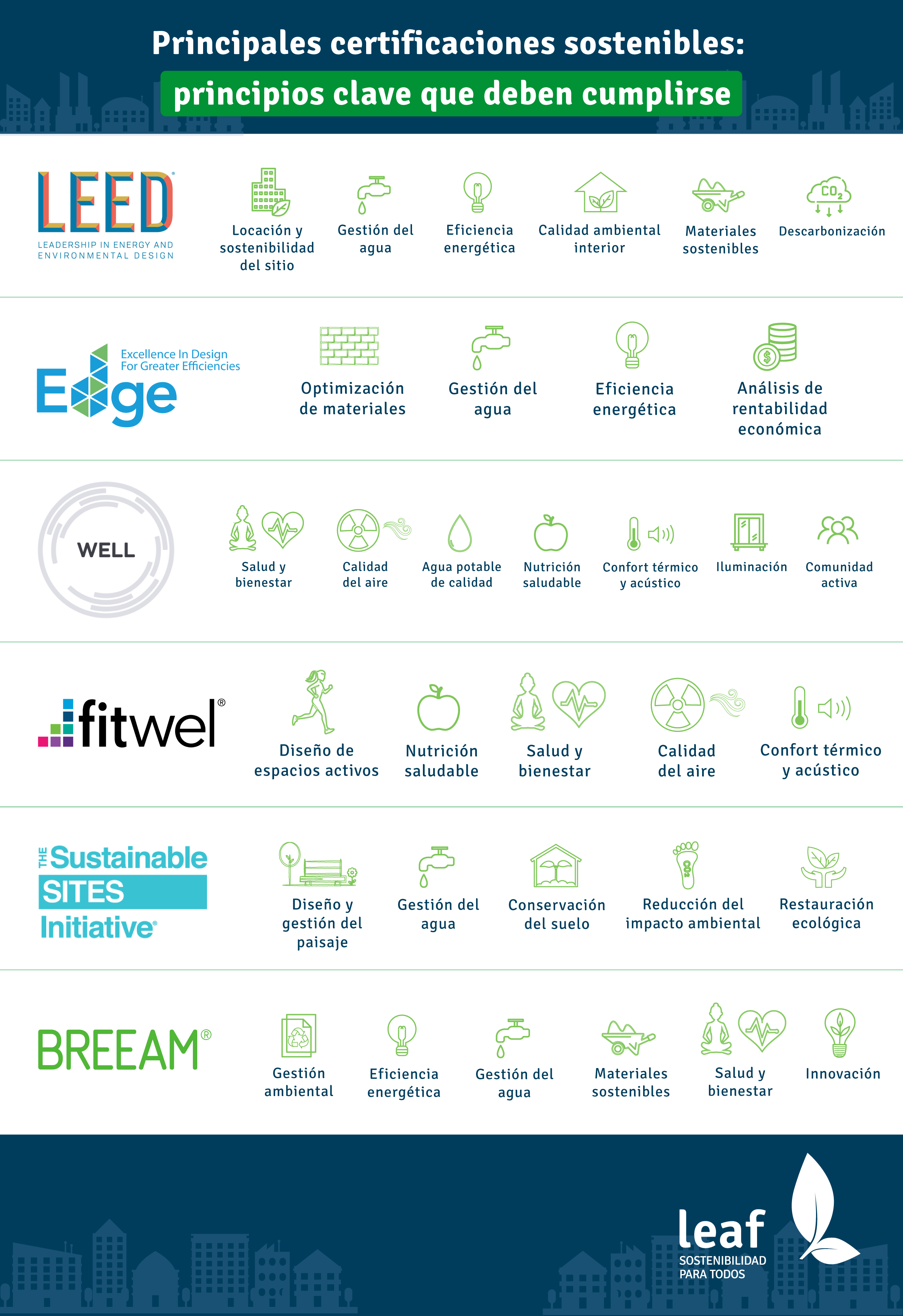
LEED is one of the most recognized certifications worldwide. It is a widely used certificate in the sustainable construction sector, as it focuses on energy efficiency, the responsible use of materials and the environmental quality of the built space.
Developed by IFC (World Bank), EDGE seeks economic and fast solutions to reduce the consumption of energy, water and materials in buildings. In addition, EDGE helps reduce the carbon footprint of buildings, promoting lower environmental impact and compliance with international sustainability standards. The EDGE strategy also encourages collaboration with sustainable suppliers, ensuring that the materials used comply with environmental and quality policies.
WELL emphasizes the health and well-being of building occupants, considering physical, emotional and social factors of the built environment. The WELL certification guarantees spaces that protect consumer health and well-being, ensuring that environments are safe and healthy for those who use them. In addition, WELL certified buildings stand out for offering a high quality service, aligned with international standards, which contributes to a superior experience for end users.
Fitwel promotes healthy communities through active design and access to environments that promote physical and mental health. In addition, it promotes various initiatives aimed at improving community health, such as wellness programs and strategies to promote physical activity. It is essential that someone is responsible for coordinating the implementation of the Fitwel principles to ensure compliance with their standards.
SITES is focused on the sustainability of the landscape and open spaces, integrating ecological, social and restoration aspects. SITES establishes specific criteria that companies must meet to ensure the sustainability of the landscape, serving as evaluation parameters in the certification process. In addition, staff training is essential to properly implement SITES standards and maintain compliance with established requirements.
BREEAM is one of the oldest and most used international sustainability assessment methodologies. The BREEAM certification can be verified by a national accreditation body, which guarantees the transparency and credibility of the process. In addition, the management of environmental, social and sustainability risks is a fundamental aspect considered in the BREEAM assessment.
Implementing sustainable certification not only improves the efficiency of a project, but also Add value to the property, attracts conscious investors and ensures a healthier environment for its occupants. These certifications grant internationally recognized seals that validate the compliance of products and companies with sustainability commitments, strengthening their image and credibility in the market.
These certifications promote sustainability in all its dimensions: environmental, social and economic. They are a practical guide for designing and building with responsibility, in line with current trends that promote the reduction of resource consumption, greenhouse gas emissions, and promote responsible management of supply chains, respect for human rights and the integration of international initiatives. The use of technological solutions makes it easier for companies to comply with these standards and move towards greater sustainability.
Leaf Global. Copyright © 2026. All rights reserved.